Off-Market Sales: Why Some Properties Sell Without Ever Appearing Online

As 2025 draws to a close, Australia’s property market has once again demonstrated its resilience. Despite ongoing affordability pressures and higher living costs, buyer demand has remained steady across many parts of the country, with national dwelling values holding firm and, in some cases, reaching new highs.
According to realestate.com.au’s latest market analysis, Australian homeowners gained significant value through 2025, highlighting the strength of underlying demand despite broader economic headwinds.
Looking ahead to 2026, the market is expected to continue evolving. Rather than a dramatic boom or downturn, conditions are shaping up to reward informed decision-making, accurate pricing, and strong local market knowledge.
Most major forecasters expect Australian property prices to continue rising in 2026, but at a more moderate pace than in previous growth cycles.
AMP’s Chief Economist Shane Oliver has indicated that national dwelling values are likely to experience slower but still positive growth, driven primarily by housing supply shortages and population pressures rather than speculative demand.
Price growth is also expected to vary significantly by location. Some cities and regions may outperform, while others may experience flatter conditions depending on affordability constraints and buyer sentiment.
For sellers, this means strong results are still achievable, but they will be driven by strategy rather than momentum alone. For buyers, opportunities are more likely to emerge in markets where price growth moderates and competition eases.
Interest rates will remain one of the most influential forces shaping the property market in 2026. Borrowing costs directly affect how much buyers can afford and how confident they feel entering the market.
As reported by SBS News, economists remain divided on whether interest rate cuts or a prolonged period of higher rates will dominate 2026, with inflation and global economic conditions continuing to influence Reserve Bank decisions.
As a result, buyers are expected to remain cautious, placing greater emphasis on value, repayment comfort, and long-term affordability. Sellers should expect buyers to compare properties closely and negotiate more assertively than in recent years.
Australia’s housing supply shortage remains a key factor supporting property prices and is expected to persist into 2026.
Population and housing data analysed by realestate.com.au shows that new housing construction continues to lag population growth, particularly across capital cities and high-demand regional areas.
This ongoing imbalance between supply and demand is likely to underpin prices, especially in suburbs with strong lifestyle appeal, employment access, and infrastructure investment.
That said, limited supply does not guarantee strong outcomes for every seller. Buyers remain selective, and homes that are poorly presented, poorly marketed, or incorrectly priced can still underperform, even in supply-constrained markets.
One of the defining themes for 2026 is that Australia does not operate as a single property market.
Property research firm Propertyology notes that growth is expected to be uneven, with some regional markets and smaller capital cities outperforming parts of Sydney and Melbourne due to affordability pressures and shifting buyer preferences.
Local factors such as infrastructure spending, employment growth, buyer demographics, and lifestyle appeal will play an increasingly important role in determining outcomes at a suburb level.
For sellers, 2026 is shaping up to be a year where preparation and execution matter more than ever.
Buyers are likely to be more informed, more selective, and more value-driven. Homes that are priced correctly from the outset, presented professionally, and supported by strong marketing campaigns are likely to attract the most interest.
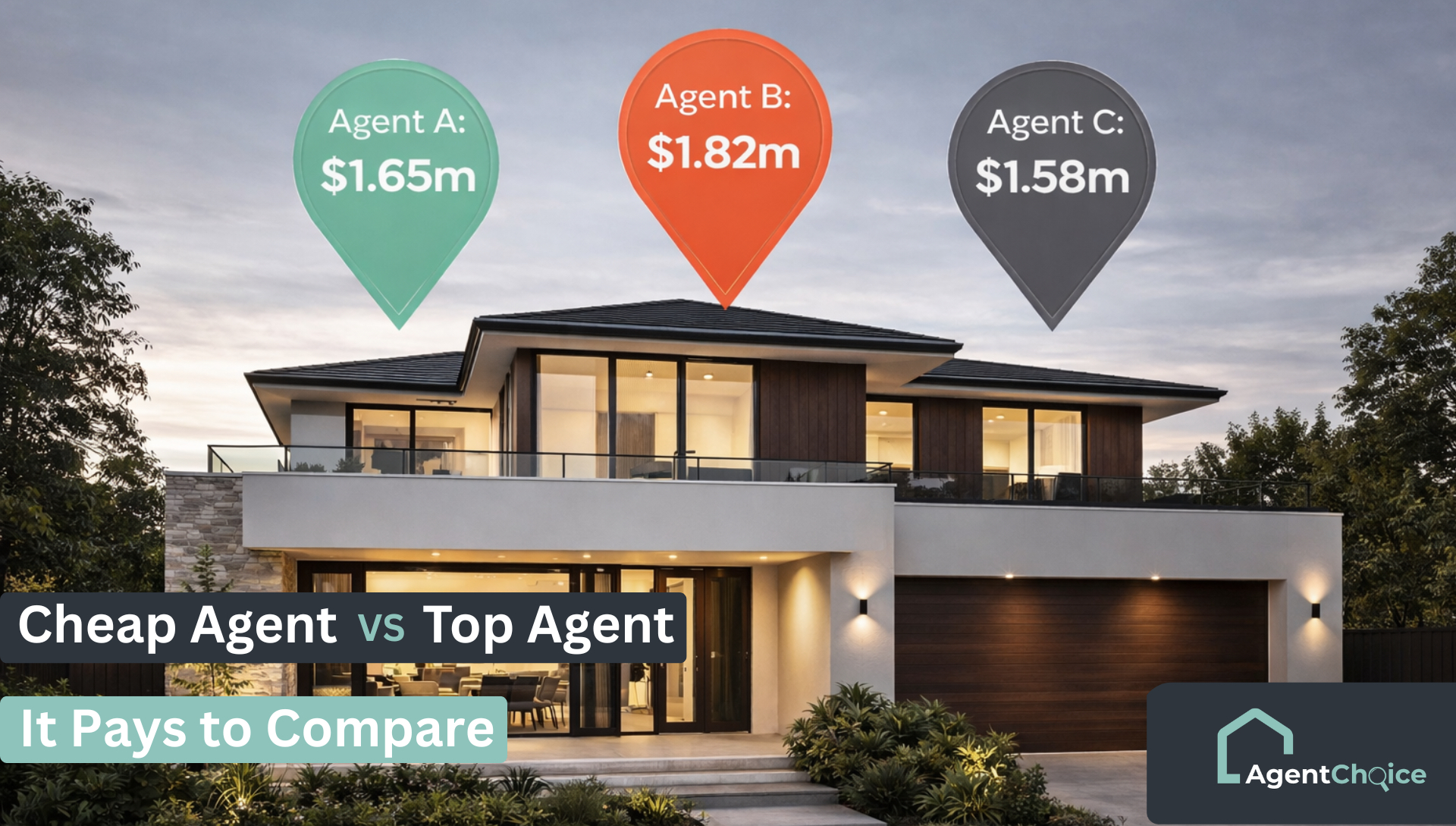
Choosing the right agent will also be critical. An experienced agent with strong local knowledge and negotiation expertise can have a meaningful impact on both buyer engagement and the final sale price.
Buyers entering the market in 2026 can expect continued competition for well-located, well-priced properties, particularly in areas where supply remains tight.
At the same time, opportunities may arise where listings sit longer on the market or where sellers adjust pricing expectations. Buyers who are financially prepared and well informed about local conditions will be best positioned to act decisively when the right property becomes available.
As market conditions become more balanced, success in 2026 will depend less on broad market momentum and more on individual strategy.
Both buyers and sellers will benefit from understanding suburb-level trends, recent comparable sales, and how broader economic factors influence local demand.
Australia’s property market outlook for 2026 points to continued activity and moderate price growth, supported by housing supply constraints and population demand, but tempered by affordability and interest rate pressures.
Those who approach the market with realistic expectations, sound strategy, and professional guidance will be best positioned to navigate the year ahead with confidence.
Before making any major decisions, it’s worth understanding how different agents would approach your property and how they perform in your local area.
At AgentChoice®, we connect homeowners with the top three performing agents in their local area, allowing you to compare experience, marketing approach, and results — all in one place.
👉 Compare agents for free and make an informed decision.