When Is the Best Time to Sell Your House in Australia

This week’s interest rate rise has sparked a familiar question across Australia.
Will property prices fall from here, or will the market keep pushing higher
The Reserve Bank of Australia lifted the cash rate by 0.25 percent to 3.85 percent. RBA Monetary Policy Decision February 2026
For context on how the cash rate works and updates over time, see RBA Cash Rate Target Overview.
The short answer is this
A rate rise can cool price growth, and in some pockets it can lead to price falls, but Australia does not move as one market. The outcome depends on local supply, local demand, affordability, and how sellers respond.
Below is what the data suggests right now, what usually happens next, and what sellers and buyers should watch in the coming weeks.
Interest rates affect property prices mainly through borrowing power and buyer psychology.
When rates rise, some buyers can borrow less than they could previously. That often reduces competition, especially in higher price brackets where buyers are closer to their limits.
The RBA has linked this decision to inflation pressures, with inflation still above the target band. ABS Consumer Price Index December 2025
Reuters also reported the rate move as the first hike in two years, driven by persistent inflation and stronger activity. Reuters report on the RBA rate rise
In plain terms, higher rates usually mean
That is the pathway that can lead to softer prices.
Even when rates rise, prices do not automatically drop. That is because the market is also driven by supply and demand.
If listings are limited and buyer demand stays strong, prices can hold up, or still rise, even with higher rates.
This is one reason Australia often experiences a slowing in growth rather than a sudden drop.
Recent market reporting has pointed to resilience in activity, including auction clearance strength early in the season. Cotality CoreLogic auction season update
The key signal to watch after a rate rise is not just the rate itself, it is whether demand fades faster than supply.
Here is what the latest public data is indicating.
Prices were strong through 2025, but 2026 may be softer
Cotality CoreLogic noted that 2025 delivered strong housing gains, while 2026 was shaping as a softer landing amid affordability pressures and renewed rate fears. Cotality CoreLogic Home Value Index commentary
This supports a common pattern after a rate rise
Growth slows first
Falls happen later only if supply rises or demand weakens sharply
Some forecasts still expect growth, but it may be uneven
Domain has published forecasts that still point to continued increases across 2026, though outcomes differ by city and property type. Domain Australian property price forecast 2026
Even within the same city, the direction can vary suburb to suburb.

Historically, after a rate rise, markets tend to move through three phases.
Phase 1: Buyers slow down, not disappear
Buyer activity typically becomes more cautious. People still inspect and still buy, but they take longer and become more selective.
Phase 2: Sellers adjust expectations
If a property is overpriced, it sits longer. Price expectations start to shift, especially for homes that need work or are not positioned well.
This is where some sellers end up reducing price guides, or accept lower offers.
Phase 3: The market splits into two speeds
In almost every cycle, the market becomes more uneven.
Homes that are well located, well presented, and correctly priced can still sell strongly.
Homes that are poorly marketed, overpriced, or less appealing can sell for less, or take much longer.
If prices fall, it usually happens first in areas where affordability is already stretched and demand is more rate sensitive.
Common examples include
This does not mean these markets collapse. It means they become more price sensitive.
If you are buying, the smartest move is to track the local indicators, not national headlines.
Here are the signals that matter most
If those start to trend up, it can signal a softer market.
If you are selling in the coming weeks or months, the goal is to avoid being the listing that sits.
In a rate rise environment, your outcome is driven by strategy.
That means focusing on
A rate rise does not stop good results. But it makes execution more important.

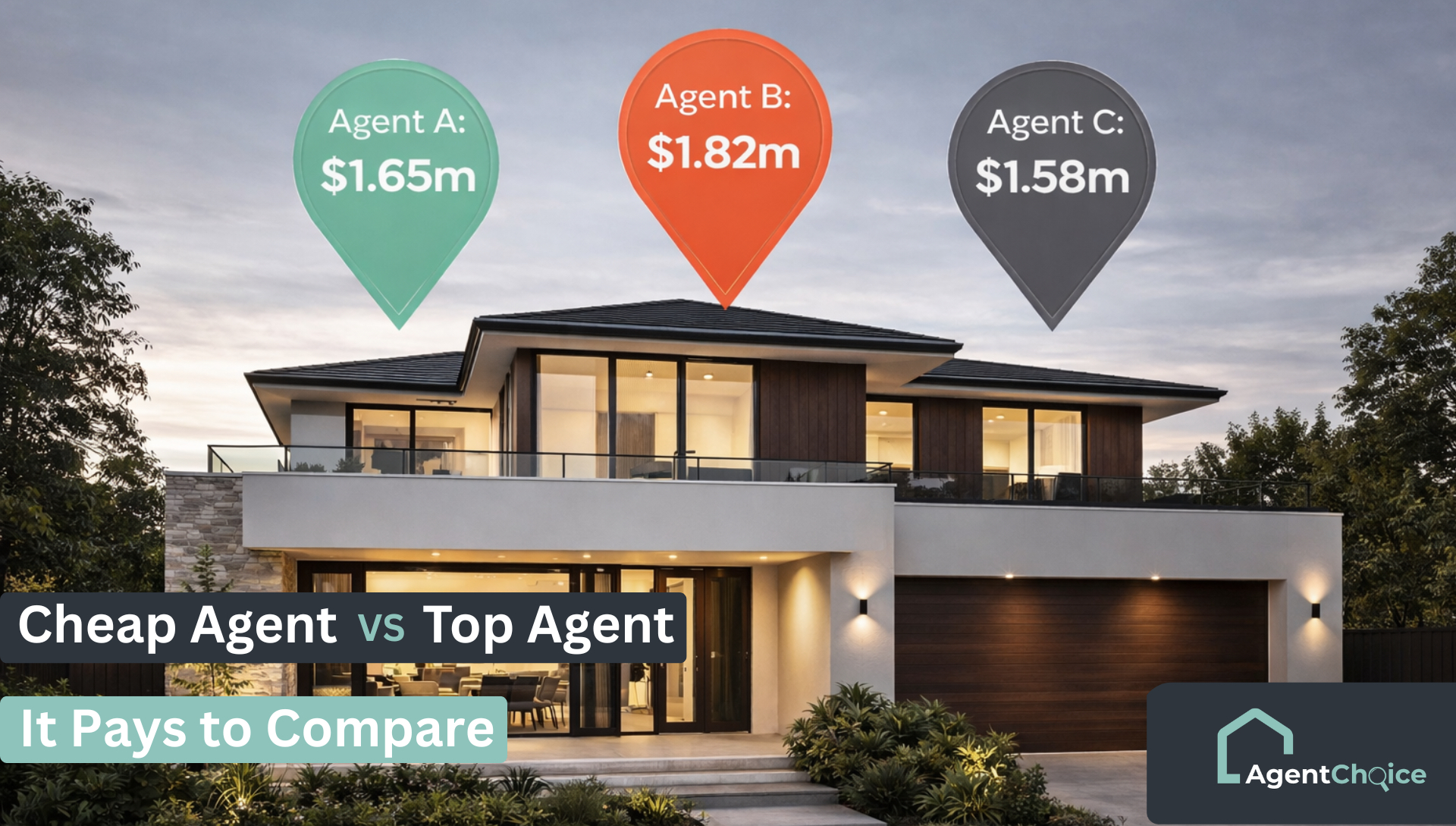
At AgentChoice®,we connect homeowners with the top 3 performing agents in their local area, so you can compare strategy, experience, and results before choosing who to represent you.
In markets shaped by interest rates, the right agent can make a measurable difference through
If you want a clearer view of your local market position before making decisions, start here.
Will property prices fall after this week’s rate rise
Some areas may soften, and some segments may see minor declines, but broad outcomes will vary suburb by suburb.
What the latest data suggests is a more likely scenario of
Slower growth first
More negotiation
Greater market unevenness
Falls only where affordability and supply pressures outweigh demand
If you want to make the right move in 2026, focus on local data, and compare the strategies of the best agents before committing.